
If you already run through the basics yourself, checking the balance, wiping the sensors, listening for new noises, you’ve probably wondered whether paying for a garage door maintenance plan on top of that is worth it. It’s a fair question.
A lot of that routine upkeep genuinely is something a homeowner can handle with a ladder and twenty minutes, and most of it overlaps with what actually causes a noisy garage door in the first place. What a DIY routine can’t replicate is the deeper, instrument-based check a licensed technician runs once or twice a year, and that’s the part worth understanding before you decide either way.
What a Professional Garage Door Maintenance Plan Covers
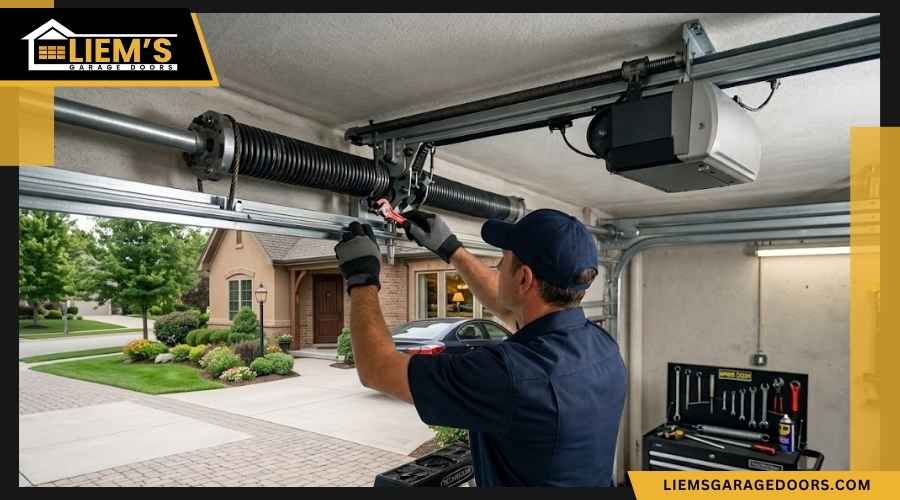
A technician isn’t just repeating your monthly walkaround with more experience. The International Door Association puts it plainly: the moment something doesn’t look or sound right is the moment to bring in a trained technician instead of guessing. The visit includes steps that need equipment and calibration data a homeowner doesn’t have on hand:
- Spring Tension Testing: A technician measures torsion spring tension with a gauge instead of judging balance by eye, catching a spring that’s drifting out of range before it snaps.
- Opener Force and Travel Calibration: Force and travel limits get checked against the manufacturer’s spec sheet, not just “does it seem to close okay.”
- Cable and Drum Inspection: Lift cables get checked at the drum, the point where fraying usually starts and is hardest to see from the ground.
- Full Hardware Torque Check: Every track bracket and hinge bolt gets torqued to spec, not just snugged by hand.
- Safety System Verification: The auto-reverse and photo-eye systems get tested against the same standard a technician would use to sign off on a new installation, not just a quick paper-towel check.
What You’re Actually Paying For With a Garage Door Maintenance Plan
The cost of a maintenance plan isn’t really about the labor of lubricating a hinge; that part takes minutes. It’s paying for three things a one-off visit doesn’t reliably give you:
- A Scheduled Check Instead of a Reactive One: The visit happens on a calendar instead of only after something already feels off, which is what actually catches a problem early.
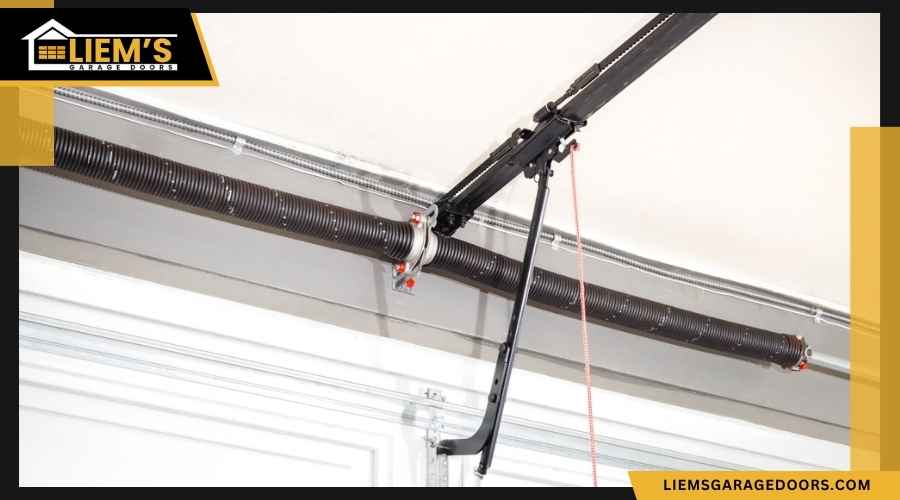
- A Second Set of Trained Eyes: Springs and cables fail without much warning, and a technician checking them on a set schedule is more likely to catch early wear than an owner glancing at them once a year.
- Fewer Emergency Calls on High-Use Doors: For a door that gets cycled multiple times a day, or one that’s already past the ten-year mark, that scheduled check tends to catch problems while they’re still a lubrication fix instead of an emergency spring replacement on a Saturday.
When Skipping the Plan Is Genuinely Fine
A maintenance plan isn’t the right call for every household, and there’s no reason to pretend otherwise. Skip it for now if your situation looks like one of these:
- A Newer System Under Light Use: A door and opener installed in the last two or three years, cycled once or twice a day, hasn’t built up enough wear yet for a paid visit to catch anything a monthly check wouldn’t.
- An Owner Already On Top of the Basics: Someone who stays ahead of common garage door problems as they come up is already covering most of what a scheduled visit exists to catch early.
- When the Math Hasn’t Flipped Yet: Once the system passes the ten-year mark, gets used multiple times a day, or springs and cables aren’t something you want to handle yourself, a plan starts paying for itself.
The Cost of Waiting Too Long for a Maintenance Plan
A spring that fails without warning doesn’t just need a part; it usually means an emergency call, a door that’s unusable until someone gets there, and a technician working under time pressure instead of on a planned visit. Springs, cables, rollers, and weatherstripping all wear out at different rates over a door’s lifespan, and a scheduled inspection is what catches that wear while it’s still a routine fix rather than a breakdown.
Get a Maintenance Plan Built Around How You Use Your Garage
Liem’s Garage Door Repair services garage doors throughout Carmichael on both a one-time and a scheduled basis, and we’ll tell you plainly which one fits your situation instead of upselling a plan you don’t need yet. If your door is past the ten-year mark or gets heavy daily use, our technicians can walk you through what a scheduled visit would actually catch.
Frequently Asked Questions
What’s included in a typical professional maintenance visit?
A gauge-tested spring check, opener force and travel calibration, cable and drum inspection, a full hardware torque check, and a safety-system test of the auto-reverse and photo-eye sensors, on top of the standard lubrication.
How often should I schedule a professional visit?
Once or twice a year is standard for most households, more often for a door that cycles many times a day or one that’s already past the ten-year mark.
Is a maintenance plan cheaper than just paying for repairs as they come up?
It depends on the door’s age and how hard it’s used. A newer, lightly used system may never need it, while an older or heavily used one usually costs less over time with scheduled checks than with reactive repairs after something fails.
Can I still do my own checks if I sign up for a maintenance plan?
Yes, and you should. The monthly visual and safety checks are still worth doing yourself between scheduled professional visits, not a replacement for them.
Does age alone mean I need a maintenance plan?
Not by itself, but it’s the biggest single factor. A system past the ten-year mark has more worn components that a visual check alone won’t catch, which is exactly the gap a gauge-based inspection is built to close.