
When your garage door is stuck halfway, the issue usually comes from misaligned safety sensors, dry rollers, blocked tracks, opener travel-limit problems, or broken springs. You may fix simple problems by cleaning the photo-eye sensors or applying proper lubrication during routine garage door maintenance.
A partially open door leaves your home exposed and can trap your vehicle inside. This guide explains what to check first, what repairs are safe to try, and when you need professional help.
What Should a Proper Garage Door Repair Include?
A proper garage door repair should start with a full safety check, not a quick part swap. A trained technician should inspect the springs, cables, rollers, tracks, opener settings, and safety sensors before recommending a repair.
This matters because one failing part can place extra stress on the rest of the system. For example, a weak spring can make the opener work harder, while dry rollers can cause the motor to stop mid-cycle.
Why Is My Garage Door Sticking Mid-Travel?
A garage door usually stops halfway because the opener detects resistance from blocked tracks, dry rollers, or an unbalanced door. Dirty or misaligned safety sensors can also stop the door because the opener thinks something is blocking the path.
Check these common trouble spots first:
- Blocked or misaligned photo-eye sensors
- Dry rollers are scraping inside the tracks
- Bent tracks trapping the rollers
- Broken springs are reducing the lifting support
- Snapped or loose lifting cables
- Incorrect opener travel-limit settings
How Do I Check the Safety Sensors
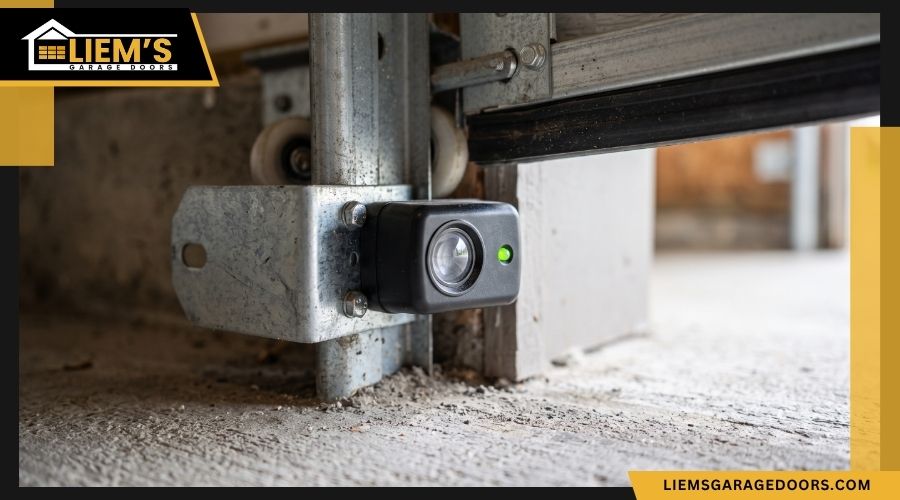
You can often fix sensor problems by wiping the lenses clean and ensuring both indicator lights remain solid. A blinking light usually means the safety beam is blocked or the sensors are misaligned.
The sensors sit near the floor on both sides of the garage door opening. Gently adjust the brackets until both sensors face each other directly. Remove boxes, tools, leaves, or cobwebs that may block the beam.
What Should I Look for on the Tracks and Rollers?
Inspect the tracks for dents, dirt, loose hardware, and heavy grease buildup. Clean the tracks with a dry rag, then lubricate the hinges, rollers, and other moving metal parts with a silicone or lithium-based garage door lubricant.
Do not pack the tracks with grease. Dirt can stick to thick grease, creating more drag. If your door has specialty panels or finishes, consider the specific garage door materials before using any cleaner near the door surface.
Common Hardware Issues and Risk Levels
Some stuck garage door problems are safe to inspect, while others need professional service right away. Sensor cleaning and light lubrication are low-risk tasks. Spring, cable, and track repairs can cause serious injury if handled incorrectly.
Use this guide to understand the risk level:
| Component Issue | Difficulty Level | Safety Risk | Recommended Action |
| Blocked photo-eye sensors | Easy | Low | Wipe lenses and realign brackets |
| Dry rollers and hinges | Easy | Low | Apply silicone or lithium spray |
| Misaligned travel limits | Medium | Moderate | Adjust opener settings carefully |
| Bent metal tracks | Medium | Moderate | Call a professional technician |
| Broken torsion springs | Hard | Extreme | Call a professional technician |
| Snapped lifting cables | Hard | Extreme | Call a professional technician |
How Can I Safely Secure a Jammed Garage Door?
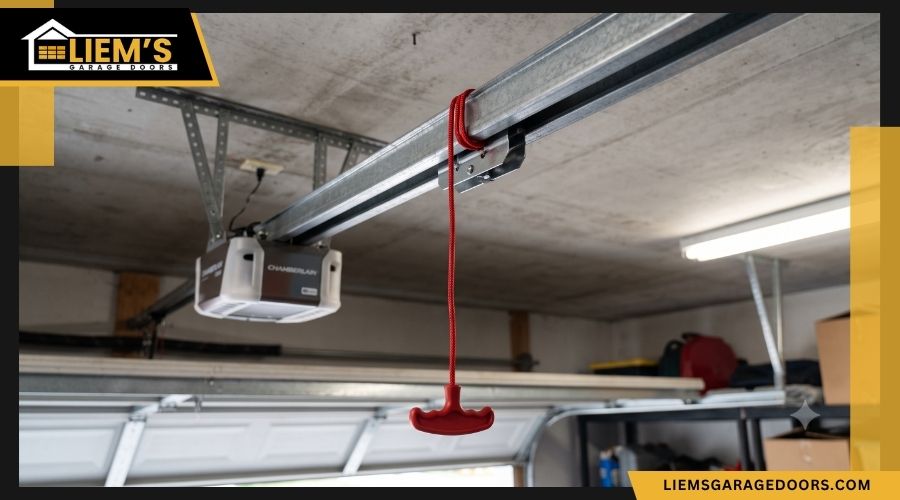
First, look at the springs, cables, and tracks before touching the door. If the springs look intact and the door is not crooked, you may pull the red emergency release cord to disconnect the opener and lower the door manually.
Never stand or walk under a door that is stuck open. A garage door is heavy, and it can fall fast if a spring or cable fails.
When Is It Unsafe to Pull the Emergency Release Cord?
Do not pull the emergency release cord if you see a gap in the torsion spring coils, a loose cable, a crooked door, or a door hanging at an angle. Disconnecting the opener in these conditions can cause the door to slam shut.
A broken spring removes the lifting support from the system. A trained technician should handle spring and cable replacement because these parts carry dangerous tension.
Are There Legal Standards for Garage Door Safety?
Yes. Automatic residential garage door openers must follow federal safety standards for entrapment protection. The Consumer Product Safety Commission states that automatic residential garage door operators must comply with 16 CFR Part 1211.
Garage door opener safety also relates to UL 325, which covers safety features for automatic door operators. These standards help make sure a garage door can stop or reverse when it detects an obstruction.
Homeowners can also follow DASMA garage door safety tips for safer everyday use. DASMA warns that damaged cables should be replaced only by trained technicians because of the danger connected to high spring tension.
California also has battery backup rules for qualifying residential garage door openers. Under SB 969, automatic garage door openers manufactured for sale, sold, offered for sale, or installed in a California residence must include a battery backup function designed for use during an electrical outage.
Secure Your Property With Professional Help
A garage door stuck halfway can point to a simple sensor issue or a dangerous spring problem. If the door looks crooked, feels too heavy, has a broken spring, or will not close safely, stop using it and call a professional.
Liem’s Garage Door Repair is a garage door company in Carmichael, CA specializing in emergency garage door repair and garage door installation for local residents. Contact our experienced technicians today to safely secure your property and get your daily routine back on track.
Frequently Asked Questions
Why does my garage door stop halfway and reverse?
Your opener may detect resistance from dry rollers, blocked tracks, or an unbalanced door. Dirty or misaligned safety sensors can also make the opener reverse because it thinks something is in the way.
Can I manually open a jammed garage door?
You can pull the red emergency release cord only if the springs, cables, and tracks look intact. Do not try this if the door is crooked, stuck at an angle, or has a visible spring gap.
What affects the cost to fix a garage door that will not close?
The cost depends on the cause of the problem. Sensor cleaning, lubrication, and opener adjustments are usually simpler fixes. Broken springs, damaged cables, bent tracks, or opener failures often require more labor, replacement parts, and professional tools.
What is the penalty for noncompliance with California battery backup laws?
California SB 969 makes violations subject to a $1,000 civil penalty. The rule helps homeowners operate qualifying residential garage door openers during electrical outages.
How often should I lubricate my tracks and hinges?
Lubricate the hinges, rollers, and moving metal parts about twice a year. Avoid heavy grease inside the tracks because it can collect dirt and cause the door to stick.