A garage door opener rarely fails all at once. It starts small: a remote that only works from the driveway, a motor that runs a beat longer than it used to, a door that reverses for no reason.
The question homeowners usually ask us is whether that’s a quick fix or the start of a bigger problem that ends in a new opener installation.
Some of these symptoms genuinely are a five-minute fix. Others mean the unit has reached the end of its useful life and a repair is just delaying the inevitable, at a cost. Here’s how to tell which one you’re looking at.
When a Garage Door Opener Repair Still Makes Sense
A handful of common complaints have simple, inexpensive causes and don’t mean the opener itself is failing. If any of these sound familiar, a garage door opener repair is usually all it takes:
- Remote Range Dropped Off: Usually a dying battery in the remote or keypad, not the opener unit. Swap the battery before assuming the worst.
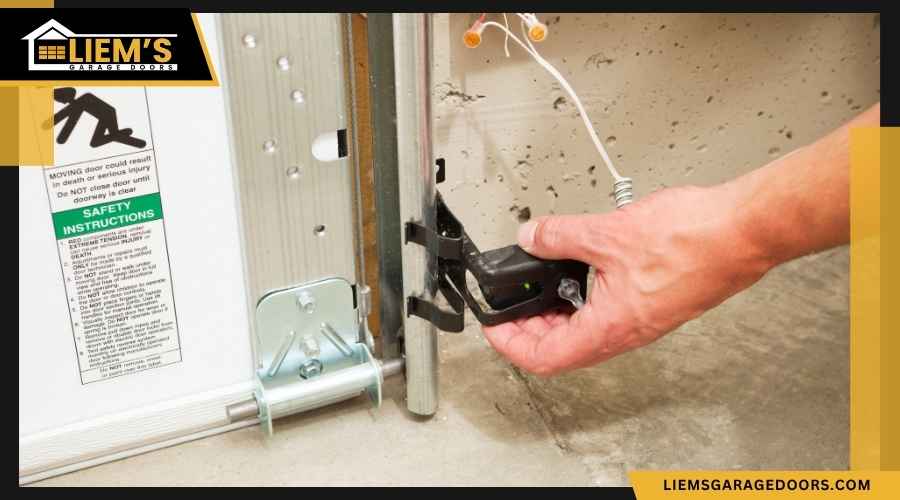
- Door Reverses Randomly: Often a dirty or misaligned photo-eye sensor near the floor. Wipe the lenses and check that both sensors are pointed at each other, not down at an angle.
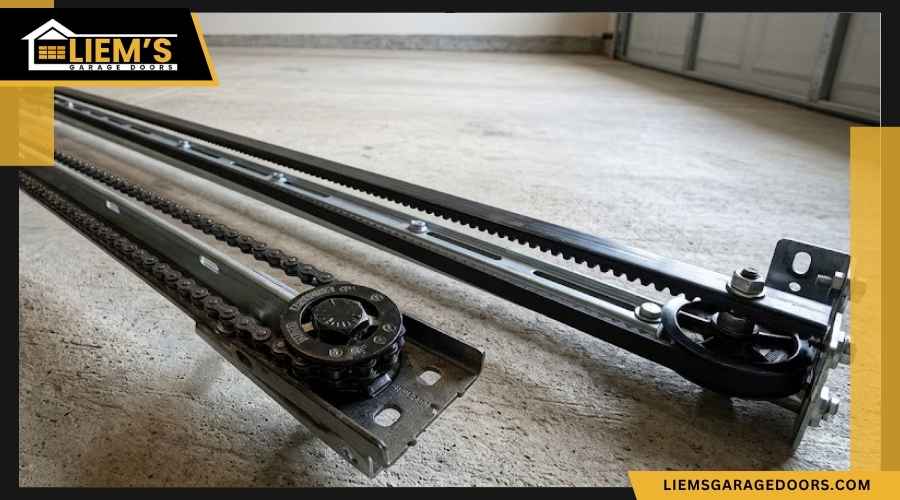
- Opener Runs, But Door Doesn’t Move: A worn drive belt or chain has usually slipped or snapped. On a belt- or chain-drive unit, this is a repairable part, not a reason to replace the whole opener.
- Light Doesn’t Turn Off: A settings issue or a burnt-out bulb, not a functional problem with the motor or drive system.
The Garage Door Opener Signs That Point to Replacement
Most residential openers last somewhere between 10 and 15 years, depending on the drive type and how often the door cycles through a day, not unlike how garage door lifespan varies across every other component in the system. Once a unit starts showing more than one of these opener-specific signs, a repair usually just buys a few more months before the same problem comes back:
- Age Past the 10 to 15 Year Mark: Older units use worn gears and motors that were never built for today’s cycle counts, especially in a household that treats the garage as the main entrance.
- Grinding or Straining Noise That Lubrication Doesn’t Fix: A motor working harder than it used to is a sign of internal wear, not something a can of spray lubricant solves.
- No Photo-Eye Sensors, or Sensors That Can’t Be Repaired: Any opener manufactured before 1993 was built before federal law required a second layer of entrapment protection on residential units. If yours doesn’t have working photo-eye sensors, that’s not a minor gap; it’s a safety issue that repair alone can’t fully close.
- Frequent Circuit Board Resets or Remote Reprogramming: A control board that keeps losing its settings is failing electronically, and electronic failures in an opener this age rarely have a single, permanent fix.
- Fixed-Code Remotes Instead of Rolling Code: Older openers broadcast the same fixed signal every time, which off-the-shelf code-grabbing devices can capture. Rolling code technology changes the signal every use and is standard on any opener sold today.
Why Your Garage Door Opener’s Safety Sensors Aren’t Optional
A federal safety standard has required secondary entrapment protection, photoelectric sensors or a pressure-sensitive edge, on every residential garage door opener sold in the United States since the early 1990s, most recently reaffirmed and updated by the Consumer Product Safety Commission in 2024. An opener that predates that requirement, or one where the sensors have failed beyond repair, isn’t a candidate for a patch job.
This is the clearest case where replacement isn’t about convenience. It’s about a door that can detect a person, pet, or object in its path before it closes on them.
What a New Garage Door Opener Actually Buys You
Beyond fixing whatever prompted the replacement, a current-generation opener solves problems the old unit was never built to handle. Belt-drive models run noticeably quieter than the chain-drive units common a decade ago, which matters if the garage sits under a bedroom.
Battery backup keeps the door working through a power outage, something worth having if the garage is the main way into the house. Smartphone connectivity lets you check the door’s status and close it remotely if it was left open, a feature that didn’t exist on most units installed before 2015.
Get an Opener Built for How You Actually Use Your Garage
Liem’s Garage Door Repair installs and services garage door openers throughout Carmichael, and we’ll tell you honestly when a repair is the right call and when it isn’t. If your opener is showing two or more of the signs above, our technicians can walk through your options for a new opener installation that matches how your household actually uses the garage.

Frequently Asked Questions
What’s the typical lifespan of a garage door opener?
Most residential openers last 10 to 15 years, though belt-drive units in a lightly used garage can last closer to 20. Chain and screw-drive openers in a garage used as a main entrance tend to wear out sooner.
Can I add photo-eye sensors to an older opener instead of replacing it?
Sometimes, if the opener’s control board supports them, but many units old enough to be missing sensors in the first place also lack the wiring and circuitry to add them properly. A technician can confirm whether your specific model supports a retrofit.
Is a grinding noise always a sign I need a new opener?
Not always. Grinding can come from a dry chain or belt that a service visit and proper lubrication fixes. It becomes a replacement sign when the noise continues after maintenance and comes with slower operation or the motor straining.
Do I need to replace the opener and the garage door springs at the same time?
No, they’re separate systems. An opener replacement doesn’t require new springs unless the springs themselves are worn, and a technician should check both independently rather than bundling them by default.
What’s the difference between fixed-code and rolling-code remotes?
A fixed-code remote sends the same signal every time, which an inexpensive code-grabbing device can intercept and copy. A rolling-code remote changes its signal with every use, which is why it’s standard on current openers.