
When your garage door won’t open, the root cause is typically a disrupted power supply, misaligned safety sensors, or a snapped high-tension torsion spring. Because these mechanical failures trap your vehicles and block access, identifying the specific component at fault is critical to preventing structural damage. Before you apply forced manual pressure to the door, you must assess the entire lifting mechanism. This guide provides a clinical approach to diagnosing the issue and fixing standard garage door problems without risking physical harm.
Mechanical Diagnostics When Your Garage Door Won’t Open
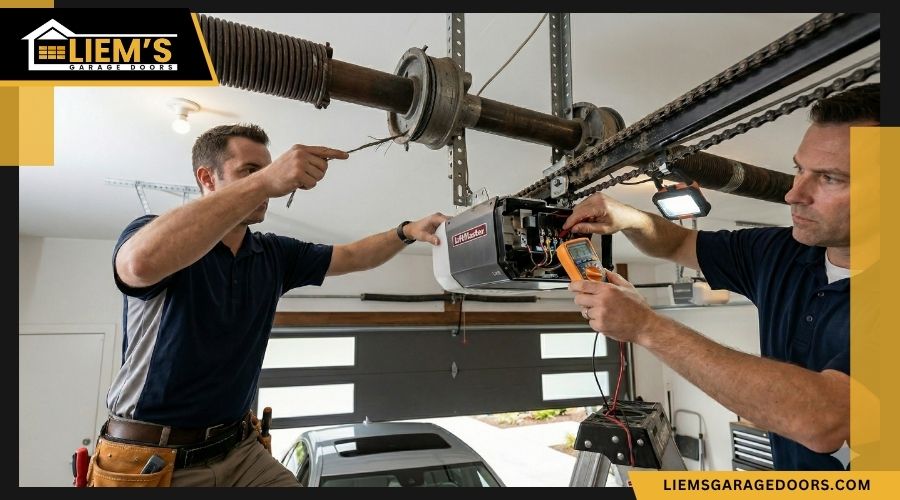
Professional troubleshooting prioritizes physical safety and structural integrity over temporary patches. Therefore, a proper diagnostic assessment must locate the specific mechanical failure before you attempt any repair. To do this effectively, examine the entire lifting system rather than limiting your inspection to the opener motor alone. Confirming correct track alignment and proper door balance ensures long-term, reliable operation.
Building Codes and Legal Standards for Replacement Openers
If your diagnostics reveal a dead motor, replacing it requires strict adherence to regional safety standards and energy laws. While a basic electric operator serves as the national standard, local building codes frequently mandate integrated battery backup systems. Consider the following compliance requirements:
- California enforces safety laws requiring battery backups for all new residential openers.
- This mandate ensures homeowners can exit the property during severe power failures or natural disasters.
- Egress legally defines this ability to exit a structure safely.
- Ignoring these mandatory building codes carries heavy civil penalties.
Always verify your local compliance requirements before securing replacement hardware.
Safe Handling of Broken Springs and High-Tension Cables
Beyond electrical failures, mechanical breakdowns present significant risks. Broken torsion springs and frayed steel lifting cables contain massive kinetic energy, making them a severe physical danger. Consequently, you must leave high-tension repairs entirely to certified technicians.
Follow these safe visual inspection steps to check for spring damage:
- Keep the garage door fully closed and remain clear of its path.
- Look at the heavy steel coil mounted horizontally above the door.
- Identify if there is a visible two-inch gap in the coil, which indicates a fractured spring.
- If you spot a break, never pull the red manual release cord. Disengaging the carriage from a broken system causes the heavy door to crash down instantly, which can result in severe physical injury.
How to Diagnose Dead Motors and Power Supply Failures
If the springs remain intact but the unit is unresponsive, you likely have an electrical issue. A completely silent opener unit usually points to a severed electrical connection. Execute the following sequential steps to verify your power flow safely before concluding the motor is permanently dead:
- Test the hardwired interior wall console. If the door opens, the motor works, and you simply need to replace the batteries in your remote transmitter.
- Inspect the wall console itself to verify that the vacation lock switch remains deactivated.
- If the wall console is entirely unresponsive, check your main electrical panel to confirm a power surge did not trip the circuit breaker connected to the garage.
What to Do If the Opener Clicks but the Door Won’t Move
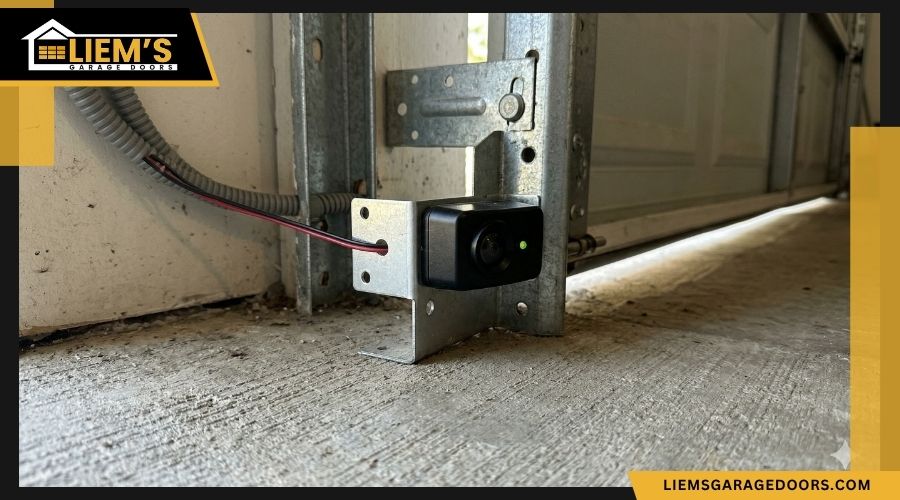
Sometimes the power functions, but the door still refuses to operate. If the motor relay clicks or the overhead lights flash while the door stays stationary, an active safety mechanism is overriding your command. Federal law mandates an active entrapment protection system to prevent the door from traveling if the downward path is compromised.
Follow these steps to clear safety mechanism triggers:
- Locate the two infrared sensors mounted at the base of the vertical floor tracks.
- Verify that the photo eyes face each other directly to maintain a continuous, invisible beam across the opening.
- Wipe the glass lenses with a clean, dry cloth to remove any physical debris or dust blocking the signal.
- Inspect the vertical metal tracks on both sides for bent steel or dislodged nylon rollers that might be obstructing the track and triggering a safety reversal.
Summary of Common Garage Door Failures and Diagnostics
By applying a systematic approach, you can accurately isolate why your door refuses to move. Match your observed hardware symptom to the appropriate diagnostic action in the table below to determine your immediate directives.
| Door Symptom | Probable Cause | Recommended Action |
| Silent motor and no lights | Dead power supply | Reset the electrical breaker |
| Motor clicks and lights flash | Blocked safety sensors | Clean and align photo eyes |
| Motor hums, but the door stays shut | Broken torsion spring | Call a licensed technician |
| Grinding noise during operation | Bad track alignment | Inspect metal tracks for debris |
Professional Diagnostics and Emergency Garage Door Services
Ultimately, a garage door that won’t open signals an underlying mechanical fault. Often, these severe breakdowns happen because early warning signs, like a noisy garage door, were left unaddressed, allowing the system to degrade over time. Immediate assessment isolates the damage, safeguards your property, and restores reliable functionality fast.
Liem’s Garage Door Repair is a garage door company in Carmichael, CA specializing in emergency garage door repair and garage door installation for local residents. When your hardware fails, secure expert emergency garage door repair immediately to restore safe access and protect your home.
Frequently Asked Questions
Why does my automatic door click but refuse to move?
This symptom usually indicates misaligned safety sensors or an engaged wall console lock. Verify the sensor alignment and disable active vacation lock settings.
Can I manually lift my heavy door safely?
You can pull the red emergency release cord only when the torsion springs remain completely intact. Never attempt manual lifting if the primary lifting coil is fractured.
What is the penalty for non-compliance with state opener laws?
Installing a motor without a required battery backup in regulated zones triggers substantial civil fines. Contractors risk severe license suspension for ignoring these regional mandates.
How do I know if the logic board is completely fried?
A dead logic board emits no relay clicks and illuminates no diagnostic lights upon receiving a command. A licensed technician must test the direct electrical voltage to confirm failure.
Will my homeowners’ insurance cover a broken torsion spring?
Insurance policies deny claims for standard mechanical wear and tear. Adjusters generally approve coverage only if a sudden external peril, such as a vehicle collision, destroys the door.