
If you just heard a loud bang from your garage and now the garage door won’t budge, you’re dealing with a broken garage door spring. It’s one of the most common calls we get, and it rarely means you did something wrong. Your garage door depends on a spring system to carry most of its weight, and when that system fails, the door can suddenly feel impossible to lift or open at all.
In this guide, we’ll cover what actually happens when a spring breaks, why it happens, the warning signs to look for, and what to do right now to stay safe.
What Happens When a Garage Door Spring Breaks?
A garage door doesn’t stay up on its own. The spring system inside carries most of that weight, and here’s what’s involved when it fails:
- Torsion Springs: Mounted on a bar above the door, these springs twist and hold tension to counterbalance the door’s weight.
- Extension Springs: Found stretched along the tracks on either side of the door, these springs stretch and contract instead of twisting.
- What the Failure Feels Like: When a spring snaps, it releases its stored tension all at once, which is what causes that loud popping sound, and it’s also what leaves the opener or your own arms lifting the door’s full weight with no help.
- The Opener Isn’t Built for This: Garage door opener motors are designed to move a door that’s already balanced by its springs, not to lift the door’s full weight on their own. Running the opener after a spring breaks can strain or burn out the motor.
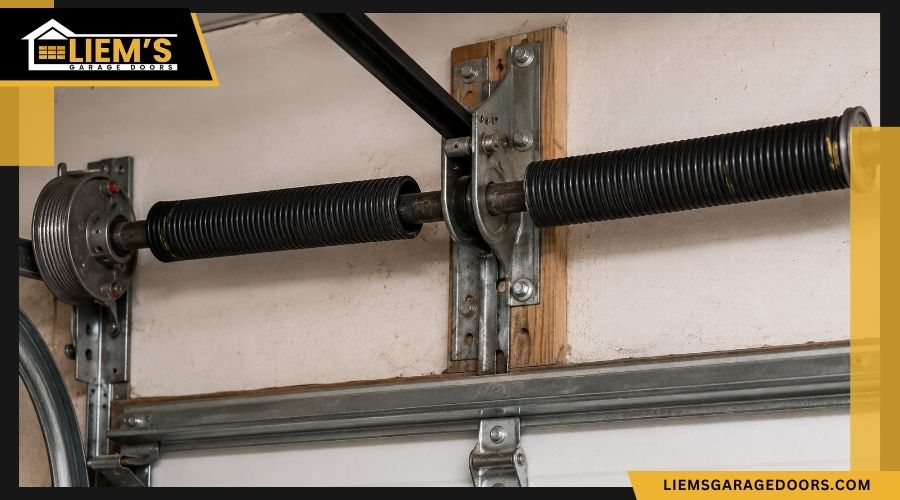
Why Garage Door Springs Break
Springs rarely fail out of nowhere. A few specific things wear them down over time:
- Normal Wear and Cycles: Standard springs are rated for about 10,000 open-and-close cycles, which works out to roughly 5 to 7 years of average use.
- A Mismatched Spring: If your door’s weight changed, such as a heavier replacement door or added insulation, the spring may be working harder than it was built for.
- Rust and Corrosion: Moisture weakens the wire and creates small stress points where a crack can start.
- Temperature and Humidity Swings: Hot summers and damp, cooler mornings both add stress to the metal over years of daily use, according to industry guidance on spring cycle life.
Warning Signs You’re Dealing With a Broken Spring
Not every garage door problem is a spring problem. These signs point specifically at a broken spring:
- A Loud Bang or Pop: Most people say it sounds like a gunshot coming from inside the garage.
- A Door That Suddenly Feels Heavy: The door may only open a few inches before the opener stalls or strains.
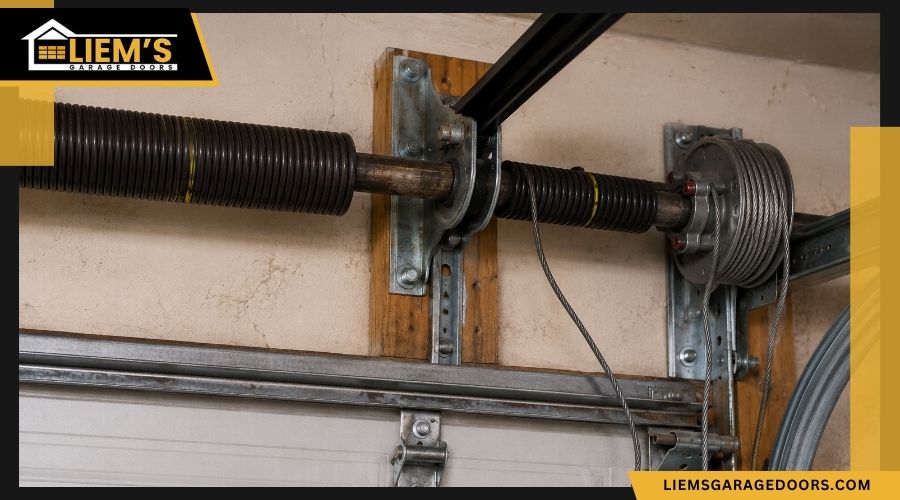
- A Gap in the Coil: Look above the door for a visible separation in the spring itself.
- Loose or Frayed Cables: A broken spring often lets the cables at the bottom corners of the door go slack.
- A Crooked or Uneven Door: If only one spring failed on a two-spring system, the door can hang at a noticeable angle instead of moving straight.
What to Do When Your Garage Door Spring Breaks
A broken spring isn’t a DIY fix. It holds a large amount of tension and can cause serious injury if handled the wrong way. Here’s what to do instead while you wait for a technician:
- Don’t Force the Door: Pulling, pushing, or repeatedly hitting the opener remote just puts more strain on the motor and track.
- Unplug the Opener: Disconnecting power stops the motor from trying to run on its own and keeps anyone from accidentally triggering it with a remote or wall switch while the spring is out.
- Use the Manual Release Carefully: Most openers have a release cord that lets you lift the door by hand, but stop if it feels too heavy.
- Keep the Area Clear: Keep kids and pets away from the door and spring until a technician has looked at it.
Once the area’s safe, calling a professional is the next step. Spring repair takes the right tools and training, and most calls can be scheduled the same day.
What Professional Spring Repair Actually Involves
Once a garage door technician arrives, the process follows the same basic steps every time. Here’s what actually happens during a spring replacement:
- Time On-Site: Most standard replacements take 1 to 2 hours from start to finish.
- Safely Releasing Tension: The technician removes what’s left of the old spring using tools built for the job.
- Installing Matched Springs: New springs are sized to your door’s actual weight, not a generic size.
- Testing and Balancing: The door gets tested to make sure it opens and closes evenly before the job is done.
- Replacing Both Springs: If one spring broke, we’ll usually recommend replacing both, since the second one has the same wear and is likely to fail soon too.
Get Your Garage Door Springs Working Like New
A broken spring feels like a bigger problem than it usually is. The bang is alarming, and a door that won’t budge is a real inconvenience, but once you know what caused it and what not to touch, the fix itself is usually quick for a professional. Skip the DIY videos, keep the area clear, and call someone who can get your door back to normal safely.
Liem’s Garage Door Repair has spent more than a decade fixing garage doors, and a broken spring is one of the most common issues we handle. If yours just broke, our garage door spring repair team can usually get out the same day to get it moving again safely.
Frequently Asked Questions
How do I know for sure my garage door spring broke and not something else?
The clearest sign is a loud bang followed by a door that suddenly feels much heavier to lift or won’t fully open. If you also see a gap in the coil above the door or loose cables at the bottom corners, that confirms it’s the spring rather than a track or roller issue.
Can I get my car out if the garage door won’t open because of a broken spring?
Usually, yes. Most openers have a manual release cord that disconnects the door from the motor so you can lift it by hand.
Go slowly and stop if the door feels too heavy to lift safely. That’s your cue to wait for a technician instead of forcing it.
How long does it take to replace a broken garage door spring?
Most standard replacements take 1 to 2 hours once a technician arrives, including installing the new spring and balancing the door afterward. Older or custom door setups can take longer if extra adjustment is needed.
If one spring broke, do I need to replace both?
We usually recommend it. The second spring has the same age and cycle count as the one that just failed, so it’s typically close behind. Replacing both in one visit keeps the door balanced and avoids a second service call soon after.
How much does it cost to fix a broken garage door spring?
It depends on your door’s size, spring type, and whether one or both springs need replacing. We give upfront, no-surprise estimates before any work starts. Call or request a quote, and we’ll walk you through the actual cost for your door.